|
Know the Difference
What Should I Do?
What Supplies Do I Need?
What Do I Do After A Flood?
Flood Safety Checklist
Floods are among the most frequent and costly natural disasters.
Conditions that cause floods include heavy or steady rain for several
hours or days that saturates the ground. Flash floods occur suddenly due
to rapidly rising water along a stream or lowlying area.
Know the Difference
Flood/Flash Flood WatchFlooding or flash flooding is possible in your area.
Flood/Flash Flood WarningFlooding or flash flooding is already occurring or will occur soon in your area.
What Should I Do?
- Listen to area radio and television stations and a NOAA Weather
Radio for possible flood warnings and reports of flooding in progress or
other critical information from the National Weather Service (NWS).
- Be prepared to evacuate at a moments notice.
- When a flood or flash flood warning is issued for your area, head for higher ground and stay there.
- Stay away from floodwaters. If you come upon a flowing stream
where water is above your ankles, stop, turn around and go another way.
Six inches of swiftly moving water can sweep you off of your feet.
- If you come upon a flooded road while driving, turn around and
go another way. If you are caught on a flooded road and waters are
rising rapidly around you, get out of the car quickly and move to higher
ground. Most cars can be swept away by less than two feet of moving
water.
- Keep children out of the water. They are curious and often lack judgment about running water or contaminated water.
- Be especially cautious at night when it is harder to recognize flood danger.
- Because standard homeowners insurance doesnt cover flooding,
its important to have protection from the floods associated with
hurricanes, tropical storms, heavy rains and other conditions that
impact the U.S. For more information on flood insurance, please visit
the National Flood Insurance Program Web site at www.fema.gov/business/nfip.
What Supplies Do I Need?
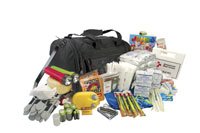
- Waterat least a 3day supply; one gallon per person per day
- Foodat least a 3day supply of nonperishable, easytoprepare food
- Flashlight
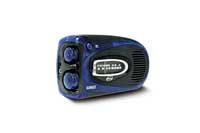
- Battery powered or handcrank radio (NOAA Weather Radio, if possible)
- Extra batteries
- First aid kit
- Medications (7day supply) and medical items (hearing aids with extra batteries, glasses, contact lenses, syringes, cane)
- Multipurpose tool
- Sanitation and personal hygiene items
- Copies of personal documents (medication list and pertinent
medical information, deed/lease to home, birth certificates, insurance
policies)
- Cell phone with chargers
- Family and emergency contact information
- Extra cash
- Emergency blanket
- Map(s) of the area
- Baby supplies (bottles, formula, baby food, diapers)
- Pet supplies (collar, leash, ID, food, carrier, bowl)
- Tools/supplies for securing your home
- Extra set of car keys and house keys
- Extra clothing, hat and sturdy shoes
- Rain gear
- Insect repellent and sunscreen
- Camera for photos of damage
What Do I Do After A Flood?
- Return home only when officials have declared the area safe.
- Before entering your home, look outside for loose power lines, damaged gas lines, foundation cracks or other damage.
- Parts of your home may be collapsed or damaged. Approach
entrances carefully. See if porch roofs and overhangs have all their
supports.
- Watch out for wild animals, especially poisonous snakes that may have come into your home with the floodwater.
- If you smell natural or propane gas or hear a hissing noise, leave immediately and call the fire department.
- If power lines are down outside your home, do not step in puddles or standing water.
- Keep children and pets away from hazardous sites and floodwater.
- Materials such as cleaning products, paint, batteries,
contaminated fuel and damaged fuel containers are hazardous. Check with
local authorities for assistance with disposal to avoid risk.
- During cleanup, wear protective clothing, including rubber gloves and rubber boots.
- Make sure your food and water are safe. Discard items that have
come in contact with floodwater, including canned goods, water bottles,
plastic utensils and baby bottle nipples.
- When in doubt, throw it out!
- Do not use water that could be contaminated to wash dishes,
brush teeth, prepare food, wash hands, make ice or make baby formula.
- Contact your local or state public health department for
specific recommendations for boiling or treating water in your area
after a disaster as water may be contaminated.
|