Preparing for Events, Tsunamis
Why Talk About Tsunamis?
Twenty-four tsunamis have caused damage in the United States
and its territories during the last 204 years. Just since 1946, six
tsunamis have killed more than 350 people and caused a half billion
dollars of property damage in Hawaii, Alaska,
and the West Coast. As a tsunami nears the coastline, it may rise to
several feet or, in rare cases, tens of feet, and can cause great loss
of life and property damage when it comes ashore. Tsunamis can travel
upstream in coastal estuaries and rivers, with damaging waves extending
farther inland than the immediate coast. A tsunami can occur during any
season of the year and at any time, day or night.
What Are Tsunamis and What Causes Them?
Tsunamis are ocean waves produced by earthquakes or underwater
landslides. The word is Japanese and means "harbor wave," because of the
devastating effects these waves have had on low-lying Japanese coastal
communities. Tsunamis are often incorrectly referred to as tidal waves,
but a tsunami is actually a series of waves that can travel at speeds
averaging 450 (and up to 600) miles per hour in the open ocean. In the
open ocean, tsunamis would not be felt by ships because the wavelength
would be hundreds of miles long, with an amplitude of only a few feet.
This would also make them unnoticeable from the air. As the waves
approach the coast, their speed decreases and their amplitude increases.
Unusual wave heights have been known to be over 100 feet high. However,
waves that are 10 to 20 feet high can be very destructive and cause
many deaths or injuries.
Tsunamis are most often generated by
earthquake-induced movement of the ocean floor. Landslides, volcanic
eruptions, and even meteorites can also generate a tsunami. If a major
earthquake is felt, a tsunami could reach the beach in a few minutes,
even before a warning is issued. Areas at greatest risk are less than 25
feet above sea level and within one mile of the shoreline. Most deaths
caused by a tsunami are because of drowning. Associated risks include
flooding, contamination of drinking water, fires from ruptured tanks or
gas lines, and the loss of vital community infrastructure (police, fire,
and medical facilities).
From an initial tsunami generating source area,
waves travel outward in all directions much like the ripples caused by
throwing a rock into a pond. As these waves approach coastal areas, the
time between successive wave crests varies from 5
to 90 minutes. The first wave is usually not the largest in the series
of waves, nor is it the most significant. Furthermore, one coastal
community may experience no damaging waves while another, not that far
away, may experience destructive deadly waves. Depending on a number of
factors, some low-lying areas could experience severe inland inundation
of water and debris of more than 1,000 feet.
Learn whether tsunamis have occurred in your
area by contacting your local emergency management office, National
Weather Service office, or American Red Cross chapter. If you are in a
tsunami risk area, learn how to protect yourself, your family, and your
property.
Awareness Information
The West Coast/Alaska Tsunami Warning Center (WC/ATWC) is responsible for tsunami warnings for California, Oregon, Washington, British Columbia, and Alaska.
The Pacific Tsunami Warning Center (PTWC) is responsible for providing warnings to international authorities, Hawaii, and U.S. territories within the Pacific basin. The two Tsunami Warning Centers coordinate the information being disseminated.
All tsunamis are potentially
dangerous, even though they may not damage every coastline they strike.
Damaging tsunamis are very rare. Our coastlines are vulnerable, but
tsunamis are infrequent. Understand the hazard and learn how to protect
yourself, but don't let the threat of tsunamis ruin your enjoyment of
the beach.
The WC/ATWC and PTWC may issue the following bulletins:
-
WATCH: A tsunami was or
may have been generated, but is at least two hours travel time to the
area in watch status. Local officials should prepare for possible
evacuation if their area is upgraded to a warning.
-
WARNING: A tsunami was or
may have been generated, which could cause damage; therefore, people in
the warned area are strongly advised to evacuate.
-
ADVISORY: An earthquake
has occurred in the Pacific basin, which might generate a tsunami.
WC/ATWC and PTWC will issue hourly bulletins advising of the situation.
-
INFORMATION: A message with information about an earthquake that is not expected to generate a tsunami. Usually only one bulletin is issued.
Be familiar with the tsunami warning signs. A
strong earthquake lasting 20 seconds or more near the coast may generate
a tsunami. A noticeable rapid rise or fall in coastal waters is also a
sign that a tsunami is approaching.
Tsunamis most frequently come onshore as a
rapidly rising turbulent surge of water choked with debris. They are not
V-shaped or rolling waves, and are not "surfable."
Tsunamis may be locally generated or from a
distant source. In 1992, the Cape Mendocino, California, earthquake
produced a tsunami that reached Eureka in about 20 minutes, and Crescent
City in 50 minutes. Although this tsunami had a wave height of about
one foot and was not destructive, it illustrates how quickly a wave can
arrive at nearby coastal communities and how long the danger can last.
In 1957, a distant-source tsunami generated by an earthquake in the Aleutian Islands in Alaska struck Hawaii, 2,100 miles away. Hawaii experienced $5 million in damages from that tsunami.
Plan for a Tsunami
Tsunami-specific planning should include the following:
-
Learn about tsunami risk in your
community. Contact your local emergency management office or American
Red Cross chapter. Find out if your home, school, workplace or other
frequently visited locations are in tsunami hazard areas. Know the
height of your street above sea level and the distance of your street
from the coast or other high-risk waters. Evacuation orders may be based
on these numbers.
-
If you are visiting an area at risk from
tsunamis, check with the hotel, motel, or campground operators for
tsunami evacuation information and how you would be warned. It is
important to know designated escape routes before a warning is issued.
If you are at risk from tsunamis, do the following:
-
Plan an evacuation route from your home,
school, workplace, or any other place you'll be where tsunamis present a
risk. If possible, pick an area 100 feet above sea level or go up to
two miles inland, away from the coastline. If you can't get this high or
far, go as high as you can. Every foot inland or upwards may make a
difference. You should be able to reach your safe location on foot
within 15 minutes. After a disaster, roads may become impassable or
blocked. Be prepared to evacuate by foot if necessary. Footpaths
normally lead uphill and inland, while many roads parallel coastlines.
Follow posted tsunami evacuation routes; these will lead to safety.
Local emergency management officials can help advise you as to the best
route to safety and likely shelter locations.
-
Practice your evacuation route.
Familiarity may save your life. Be able to follow your escape route at
night and during inclement weather. Practicing your plan makes the
appropriate response more of a reaction, requiring less thinking during
an actual emergency situation.
-
Use a NOAA Weather Radio with a tone-alert
feature to keep you informed of local watches and warnings. The tone
alert feature will warn you of potential danger even if you are not
currently listening to local radio or television stations.
-
Talk to your insurance agent. Homeowners'
policies do not cover flooding from a tsunami. Ask about the National
Flood Insurance Program.
-
Discuss tsunami with your family. Everyone
should know what to do in case all family members are not together.
Discussing tsunamis ahead of time will help reduce fear and anxiety, and
let everyone know how to respond. Review flood safety and preparedness
measures with your family.
How to Protect Your Property
-
Avoid building or living in buildings
within several hundred feet of the coastline. These areas are more
likely to experience damage from tsunamis, strong winds, or coastal
storms.
-
Make a list of items to bring inside in
the event of a tsunami. A list will help you remember anything that can
be swept away by tsunami waters.
-
Elevate coastal homes. Most tsunami waves
are less than 10 feet. Elevating your house will help reduce damage to
your property from most tsunamis.
-
Follow flood preparedness precautions. Tsunamis are large amounts of water that crash onto the coastline, creating floods.
-
Have an engineer check your home and
advise about ways to make it more resistant to tsunami water. There may
be ways to divert waves away from your property. Improperly built walls
could make your situation worse. Consult with a professional for advice.
What to Do if You Feel a Strong Coastal Earthquake
If you feel an earthquake that lasts 20 seconds or longer when you are on the coast:
-
Drop, cover, and hold on. You should first protect yourself from the earthquake.
-
When the shaking stops, gather your family
members and evacuate quickly. Leave everything else behind. A tsunami
may be coming within minutes. Move quickly to higher ground away from
the coast.
-
Be careful to avoid downed power lines and
stay away from buildings and bridges from which heavy objects might
fall during an aftershock.
What to Do When a Tsunami WATCH Is Issued
-
Listen to a NOAA Weather Radio, Coast
Guard emergency frequency station, or other reliable source for d
emergency information. As the energy of a tsunami is transferred through
open water, it is not detectable. Seismic action may be the only
advance warning before the tsunami approaches the coastline.
-
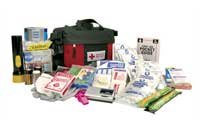
Check your Disaster Supplies Kit. Some supplies may need to be replaced or restocked.
-
Locate family members and review
evacuation plans. Make sure everyone knows there is a potential threat
and the best way to safer ground.
-
If you have special evacuation needs
(small children, elderly people, or persons with disabilities), consider
early evacuation. Evacuation may take longer, allow extra time.
-
If time permits, secure unanchored objects
around your home or business. Tsunami waves can sweep away loose
objects. Securing these items or moving them inside will reduce
potential loss or damage.
-
Be ready to evacuate. Being prepared will help you to move more quickly if a tsunami warning is issued.
What to Do When a Tsunami WARNING Is Issued
-
Listen to a NOAA Weather Radio, Coast
Guard emergency frequency station, or other reliable source for d
emergency information. Authorities will issue a warning only if they
believe there is a real threat from tsunami.
-
Follow instructions issued by local
authorities. Recommended evacuation routes may be different from the one
you use, or you may be advised to climb higher.
If you are in a tsunami risk area, do the following:
-
If you hear an official tsunami warning or
detect signs of a tsunami, evacuate at once. A tsunami warning is
issued when authorities are certain that a tsunami threat exists, and
there may be little time to get out.
-
Take your Disaster Supplies Kit. Having supplies will make you more comfortable during the evacuation.
-
Get to higher ground as far inland as
possible. Officials cannot reliably predict either the height or local
effects of tsunamis. Watching a tsunami from the beach or cliffs could
put you in grave danger. If you can see the wave, you are too close to
escape it.
-
Return home only after local officials
tell you it is safe. A tsunami is a series of waves that may continue
for hours. Do not assume that after one wave the danger is over. The
next wave may be larger than the first one.
What to Do After a Tsunami
-
Continue listening to a NOAA Weather
Radio, Coast Guard emergency frequency station, or other reliable source
for emergency information. The tsunami may have damaged roads, bridges,
or other places that may be unsafe.
-
Help injured or trapped persons. Give
first aid where appropriate. Call for help. Do not move seriously
injured persons unless they are in immediate danger of further injury.
-
Help a neighbor who may require special
assistanceinfants, elderly people, and people with disabilities. Elderly
people and people with disabilities may require additional assistance.
People who care for them or who have large families may need additional
assistance in emergency situations.
-
Use the telephone only for emergency
calls. Telephone lines are frequently overwhelmed in disaster
situations. They need to be clear for emergency calls to get through.
-
Stay out of the building if waters remain
around it. Tsunami waters, like flood waters, can undermine foundations,
causing buildings to sink, floors to crack, or walls to collapse.
-
When re-entering buildings or homes, use
extreme caution. Tsunami-driven flood waters may have damaged buildings
where you least expect it. Carefully watch every step you take.
-
Wear sturdy shoes. The most common injury following a disaster is cut feet.
-
Use battery-powered lanterns or
flashlights when examining buildings. Battery-powered lighting is the
safest and easiest, preventing fire hazard for the user, occupants, and
building.
-
Examine walls, floors, doors, staircases, and windows to make sure that the building is not in danger of collapsing.
-
Inspect foundations for cracks or other damage. Cracks and damage to a foundation can render a building uninhabitable.
-
Look for fire hazards. There may be
broken or leaking gas lines, flooded electrical circuits, or submerged
furnaces or electrical appliances. Flammable or explosive materials may
come from upstream. Fire is the most frequent hazard following floods.
-
Check for gas leaks. If you smell gas
or hear a blowing or hissing noise, open a window and quickly leave the
building. Turn off the gas using the outside main valve if you can, and
call the gas company from a neighbor's home. If you turn off the gas for
any reason, it must be turned back on by a professional.
-
Look for electrical system damage. If
you see sparks or broken or frayed wires, or if you smell burning
insulation, turn off the electricity at the main fuse box or circuit
breaker. If you have to step in water to get to the fuse box or circuit
breaker, call an electrician first for advice. Electrical equipment
should be checked and dried before being returned to service.
-
Check for sewage and water line
damage. If you suspect sewage lines are damaged, avoid using the toilets
and call a plumber. If water pipes are damaged, contact the water
company and avoid using water from the tap. You can obtain safe water
from undamaged water heaters or by melting ice cubes.
-
Use tap water if local health officials advise it is safe.
-
Watch out for animals, especially
poisonous snakes, that may have come into buildings with the water. Use a
stick to poke through debris. Tsunami flood waters flush snakes and
animals out of their homes.
-
Watch for loose plaster, drywall, and ceilings that could fall.
-
Take pictures of the damage, both of the building and its contents, for insurance claims.
-
Open the windows and doors to help dry the building.
-
Shovel mud while it is still moist to give walls and floors an opportunity to dry.
-
Check food supplies. Any food that has come in contact with flood waters may be contaminated and should be thrown out.
|