Preparing for Events, Volcanoes
Explosive volcanoes blast hot solid and molten rock fragments and
gases into the air. As a result, ashflows can occur on all sides of a
volcano and ash can fall hundreds of miles downwind. Dangerous mudflows
and floods can occur in valleys leading away from volcanoes. If you live
near a known volcano, active or dormant, be prepared to follow
instructions from your local emergency officials.
Before:
Learn about your community warning systems and emergency plans.
Be prepared for the hazards that can accompany volcanoes:
Make evacuation plans. If you live in a known volcanic hazard area, plan a route out and have a backup route in mind.
Develop an emergency communication plan. In case family members are
separated from one another during a volcanic eruption (a real
possibility during the day when adults are at work and children are at
school), have a plan for getting back together. Ask an out-of-state
relative or friend to serve as the family contact, because after a
disaster, its often easier to call long distance. Make sure everyone
knows the name, address, and phone number of the contact person.
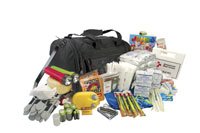
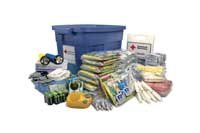
Have disaster supplies on hand:
- Flashlight and extra batteries
- First aid kit and manual
- Emergency food and water
- Non-electric can opener
- Essential medicines
- Dust mask
- Sturdy shoes
|
EVACUATION
|
|
Although it may seem safe to stay at home and wait out an
eruption, if you are in a hazardous zone, doing so could be very
dangerous. Stay safe. Follow authorities instructions and put your
disaster plan into action.
|
Get a pair of goggles and a throw-away breathing mask for each member of the household in case of ashfall.
Contact your local emergency management office or American Red Cross chapter for more information on volcanoes.
During:
Follow the evacuation order issued by authorities.
Avoid areas downwind and river valleys downstream of the volcano.
If caught indoors:
- Close all windows, doors, and dampers.
- Put all machinery inside a garage or barn.
- Bring animals and livestock into closed shelters.
If trapped outdoors:
- Seek shelter indoors.
- If caught in a rockfall, roll into a ball to protect your head.
- If caught near a stream, be aware of mudflows. Move up slope, especially if you hear the roar of a mudflow.
Protect yourself during ashfall:
- Wear long-sleeved shirts and long pants.
- Use goggles to protect your eyes.
- Use a dust mask or hold a damp cloth over your face to help breathing.
- Keep car or truck engines off.
|
MUDFLOWS
|
|
Mudflows are powerful rivers of mud that can move 20 to
40 mph. Hot ash or lava from a vol-canic eruption can rapidly melt snow
and ice at the summit of a volcano. The melt water quickly mixes with
falling ash, with soil cover on lower slopes, and with debris in its
path. This turbu-lent mixture is dangerous in stream channels and can
travel more than 50 miles away from a volcano. Also intense rainfall can
erode fresh volcanic depos-its to form large mudflows. If you see the
water level of a stream begin to rise, quickly move to high ground. If a
mud-flow is approaching or passes a bridge, stay away from the bridge.
|
Stay out of the area defined as a restricted zone by government
officials. Effects of a volcanic eruption can be experienced many miles
from a volcano. Mudflows and flash flooding, wildland fires, and even
deadly hot ashflow can reach you even if you cannot see the volcano
during an eruption. Avoid river valleys and low lying areas. Trying to
watch an erupting volcano up close is a deadly idea.
Listen to a battery-operated radio or television for the latest emergency information.
After:
If possible, stay away from volcanic ashfall areas.
When outside:
- Cover your mouth and nose. Volcanic ash can irritate your respiratory system.
- Wear goggles to protect your eyes.
- Keep skin covered to avoid irritation from contact with ash.
Clear roofs of ashfall. Ashfall is very heavy and can cause buildings
to collapse. Exercise great caution when working on a roof.
Avoid driving in heavy ashfall. Driving will stir up more ash that can clog engines and stall vehicles.
If you have a respiratory ailment, avoid contact with any amount of
ash. Stay indoors until local health officials advise it is safe to go
outside.
Remember to help your neighbors who may require special assistance infants, elderly people, and people with disabilities.
|